
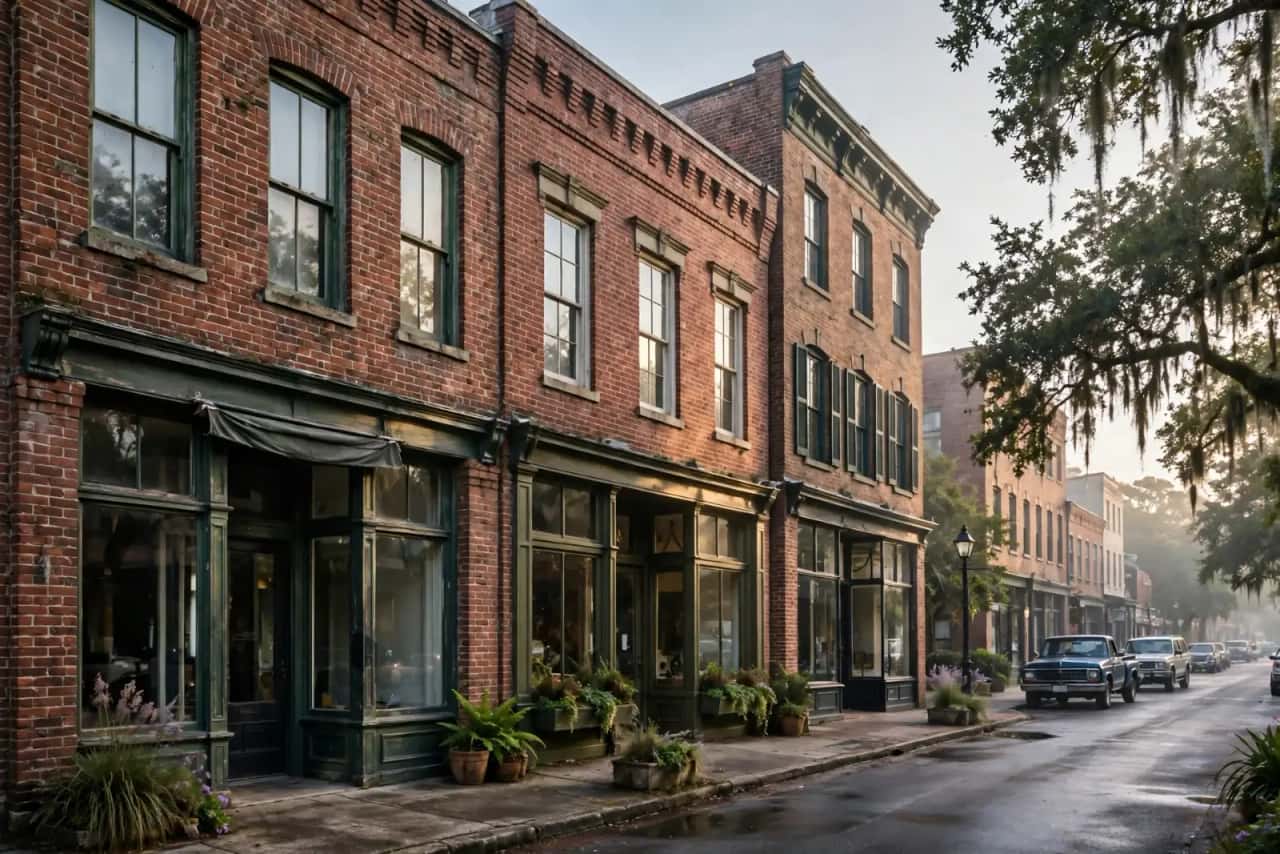
Downtown is where Gastonia's oldest commercial plumbing lives. Buildings that started as banks, department stores and theaters now hold restaurants, offices and apartments on the upper floors.
That mix creates problems houses don't have. A kitchen on the ground floor and apartments above share the same drain stack, so a grease clog or a cracked cast-iron joint affects several tenants at once.
Downtown Gastonia at a glance
- Designation
- Downtown Gastonia Historic District, National Register 2004[1]
- Buildings built
- Mostly early 1890s to early 1950s[1]
- Size
- About 46 acres, 77 contributing buildings[1]
- Boundaries
- Roughly Main Ave, Broad St, Second Ave and Chester St[1]
Common downtown plumbing issues
- Grease buildup in restaurant kitchen lines and at grease interceptors
- Cast-iron drain stacks that crack or scale inside after many decades
- Upper-floor apartment conversions with long horizontal drain runs
- Shared water services and old shutoff valves that no longer close fully
- Backflow devices that need periodic testing
Working in occupied buildings
Downtown repairs usually happen around business hours. Jetting a restaurant line before opening, shutting water to a building with several tenants, or opening a wall in a ground-floor shop all need coordination with owners and tenants. Exterior changes to buildings in a historic district may need review by the city.
A building plumbing map pays for itself
When a leak happens in an occupied building, knowing exactly where to shut off water saves time, damage and tenant frustration.
- Locations of the main water shutoff and each tenant's shutoff
- Drain stacks and which units share them
- Cleanouts for each stack and the building sewer
- Grease interceptor location and pumping schedule
- Backflow device location and last test date
- Water heater locations and ages
Restaurants and upper-floor apartments
When a restaurant shares a drain stack with apartments above, grease from the kitchen can cause backups that affect residents too. Regular kitchen line jetting, a properly maintained grease interceptor and staff training on scraping plates keep shared lines open. For apartment conversions, quiet cast-iron drain pipe or insulated PVC reduces drain noise in the space below.
Plumbing services for Downtown Gastonia homes
Nearby areas we cover
plumbing in York-Chester, plumbing in Loray Mill Village, plumbing in Highland. See the full Gastonia and Gaston County service area guide.
Helpful guides for Downtown Gastonia homeowners
- Why Drains Keep Clogging: Drains keep clogging when the buildup was only punched through instead of removed, when something structural catches waste (roots, a sag or a broken pipe), or when the same materials keep going down the drain.
- Signs of a Sewer Line Problem: The main signs of a sewer line problem are several drains backing up at once, water rising in a tub or floor drain when a toilet is flushed, gurgling, sewage odor in the yard and a soggy or sunken strip of lawn along the sewer route.
- Why Water Pressure Drops: Low pressure at one fixture is usually a clogged aerator, cartridge or supply valve.
- How to Find Your Main Water Shutoff: The main water shutoff is usually where the water line enters the house: in the crawl space near the front foundation wall, in a garage, utility closet or near the water heater.
- What Causes Sewer Odors?: Most sewer odors come from a dry drain trap, a failed toilet wax ring, a blocked or cracked vent pipe, or a leaking or cracked drain line.
Other areas we serve
Willow Creek plumbing · Forest Heights plumbing · Plumber in Belmont · Plumber in Mount Holly · Plumber in Cramerton · Plumber in McAdenville · Plumber in Lowell · Plumber in Ranlo · Plumber in Dallas · Plumber in Bessemer City
Downtown Gastonia plumbing questions
Who is responsible for a clogged stack in a downtown building?
Usually the building owner, since the stack serves several units. Tenants should report backups to the owner or manager right away.
How often should a downtown restaurant's kitchen line be cleaned?
It depends on volume and grease handling. A camera inspection shows how fast grease builds up so jetting can be scheduled before it causes a backup.
Do historic downtown buildings need special plumbing permits?
Plumbing work needs the usual permits. Exterior changes in the historic district may need separate review by the city.
Sources
- Wikipedia: Downtown Gastonia Historic District
- NC SHPO: Downtown Gastonia Historic District nomination
Local facts on this page are drawn from the sources above and were last reviewed 2026-10-06. Plumbing guidance is general and based on typical materials for the homes' age.