
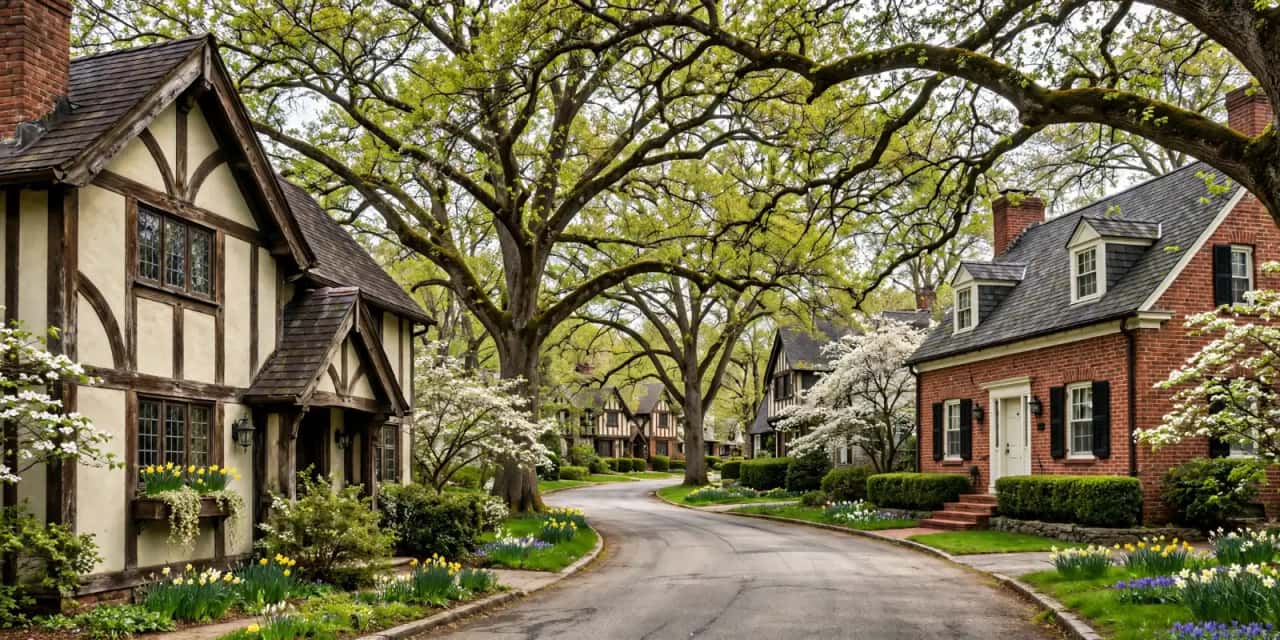
Forest Heights grew as one of Gastonia's early automobile suburbs, with curving residential streets instead of a grid. The oldest houses date to the 1920s, and a second wave came after World War II.
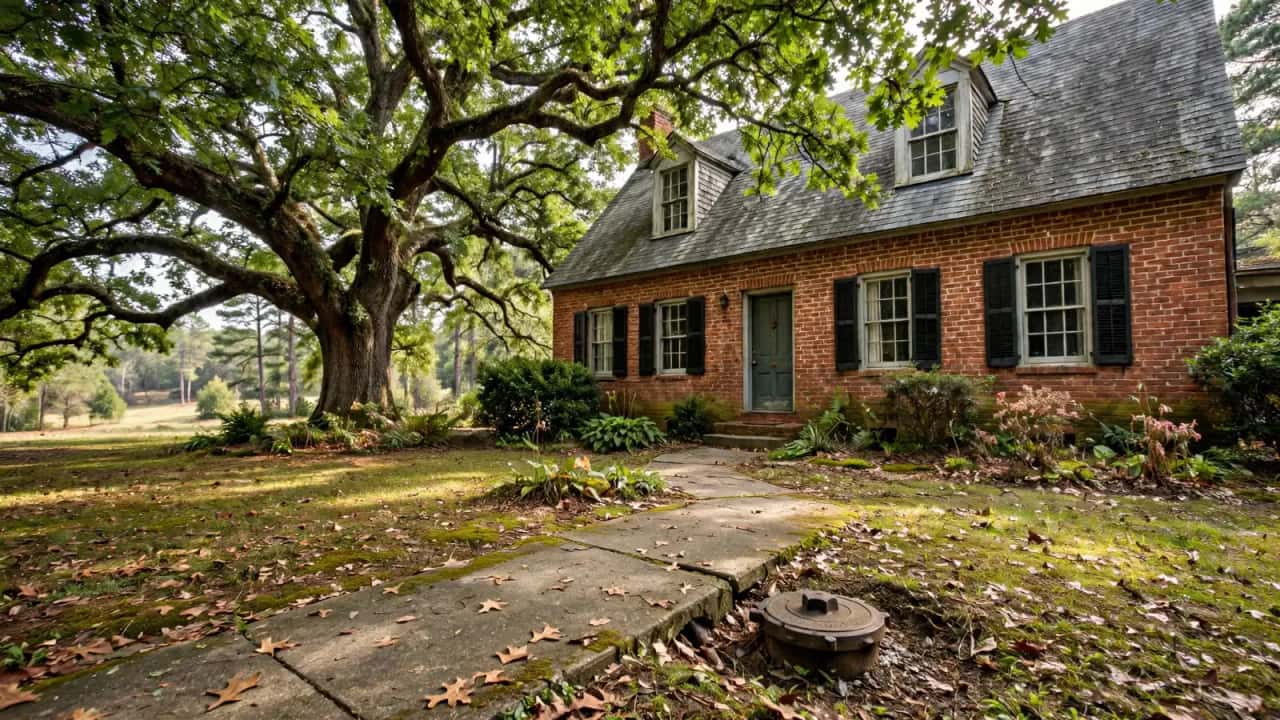
That makes it a neighborhood of two plumbing generations. A 1920s Tudor and a 1950s Cape Cod on the same street were plumbed with different materials, and both have probably had partial updates since.
Forest Heights at a glance
- Includes
- Forest Hills, Forest Heights and Highland Hills[1]
- Homes built
- Oldest from the 1920s; many postwar[1]
- Styles
- Tudor Revival, Georgian, Cape Cod[1]
- Layout
- Early automobile suburb with curving streets[1]
Two generations of plumbing
- 1920s–1930s homes: galvanized supply, cast-iron drains and clay sewer laterals; old gate valves
- Postwar homes (late 1940s–1950s): galvanized or early copper supply, cast-iron drains, clay or early fiber sewer pipe
- Both: original laterals under mature trees, now many decades old
Low pressure and rusty water
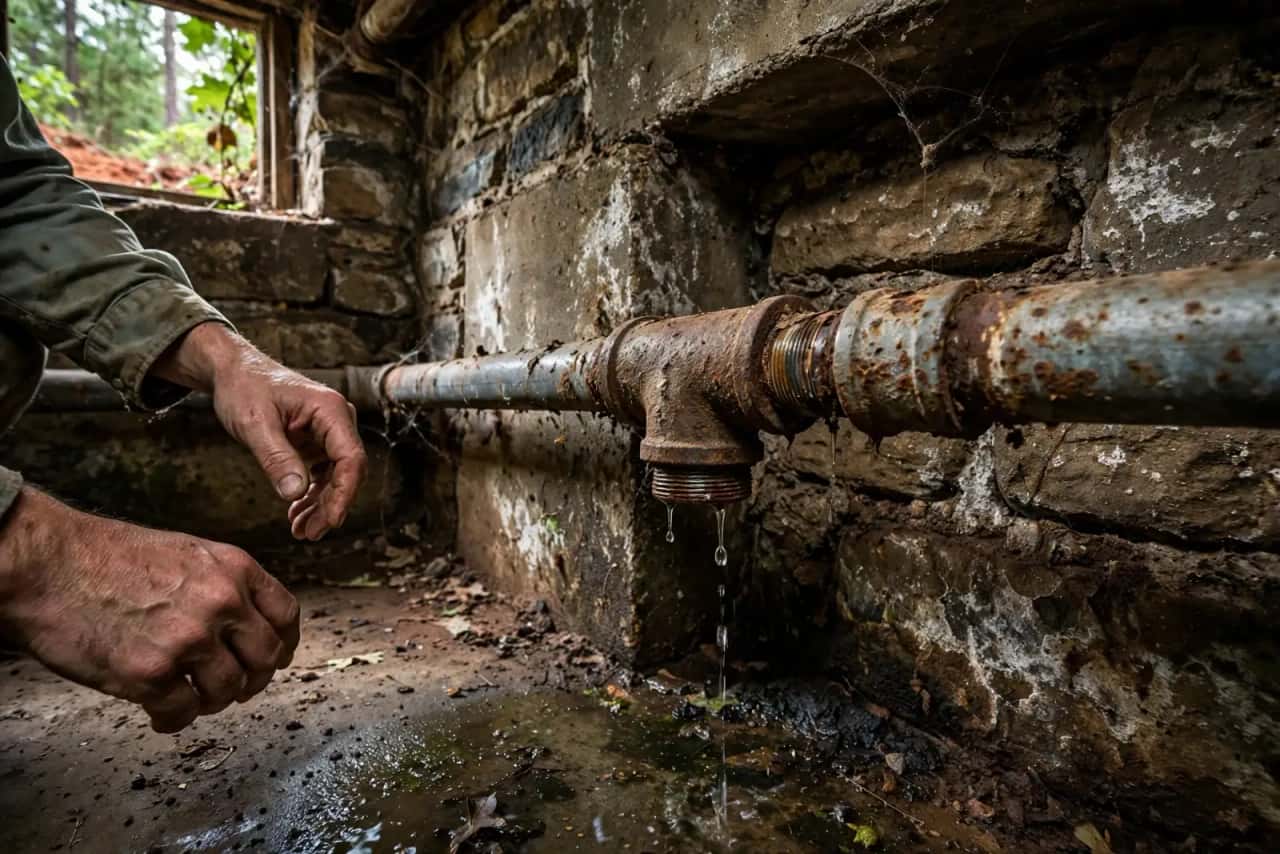
Galvanized steel rusts from the inside, narrowing the pipe until pressure drops and the first water out of a tap runs brown. If only one fixture is weak, check the aerator first. If the whole house is weak, galvanized pipe is the usual cause in homes this age.
Roots on established lots
Curving streets and big shade trees are part of the neighborhood's appeal, and the same trees send roots into clay sewer joints. A main line that clogs every year or two is a strong hint; a camera inspection confirms it.
Prioritizing repairs in a 1920s–1950s home
| Priority | Item | Why |
|---|---|---|
| 1 | Main shutoff and fixture valves | You need to stop water in an emergency |
| 2 | Sewer lateral inspection | Root and joint failures cause the worst backups |
| 3 | Galvanized supply replacement | Pressure loss and leaks only get worse |
| 4 | Water heater and venting | Safety and efficiency |
| 5 | Fixture upgrades | Comfort and water savings |
Trees and sewer lines
Mature oaks and maples add value to Forest Heights lots, and removing them isn't usually necessary to protect a sewer line. Root problems are solved at the pipe: clearing and jetting the line, then repairing or lining the damaged joints so roots can't get back in. A camera inspection shows exactly where the roots enter and how far they've spread.
Plumbing services for Forest Heights homes
Nearby areas we cover
plumbing in York-Chester, plumbing in Highland, plumbing in Downtown Gastonia. See the full Gastonia and Gaston County service area guide.
Helpful guides for Forest Heights homeowners
- Why Drains Keep Clogging: Drains keep clogging when the buildup was only punched through instead of removed, when something structural catches waste (roots, a sag or a broken pipe), or when the same materials keep going down the drain.
- Signs of a Sewer Line Problem: The main signs of a sewer line problem are several drains backing up at once, water rising in a tub or floor drain when a toilet is flushed, gurgling, sewage odor in the yard and a soggy or sunken strip of lawn along the sewer route.
- Water Heater Repair vs. Replacement: Repair a water heater when it's under about 8 years old and a single part has failed.
- Why Water Pressure Drops: Low pressure at one fixture is usually a clogged aerator, cartridge or supply valve.
- How to Find Your Main Water Shutoff: The main water shutoff is usually where the water line enters the house: in the crawl space near the front foundation wall, in a garage, utility closet or near the water heater.
Other areas we serve
Willow Creek plumbing · Loray Mill Village plumbing · Plumber in Belmont · Plumber in Mount Holly · Plumber in Cramerton · Plumber in McAdenville · Plumber in Lowell · Plumber in Ranlo · Plumber in Dallas · Plumber in Bessemer City
Forest Heights plumbing questions
Do Forest Heights homes have galvanized pipe?
Many homes from the 1920s through the 1950s were built with galvanized steel supply pipe. Some has been replaced, but partial updates often leave sections in walls or crawl spaces.
Why does my Forest Heights sewer line keep backing up?
Clay sewer laterals under mature trees are prone to roots at the joints. Repeat clogs every year or two point to roots; a camera inspection shows where.
Should I repipe a 1920s house in Forest Heights?
If you have low pressure throughout the house or rusty water, a staged repipe is usually more reliable than repairing galvanized pipe leak by leak.
Sources
Local facts on this page are drawn from the sources above and were last reviewed 2026-10-06. Plumbing guidance is general and based on typical materials for the homes' age.